Our Screening Services
Hospital-grade ultrasound technology for early detection of life-threatening conditions
Carotid Artery Screening
What It Is
A non-invasive ultrasound of the carotid arteries in your neck — the brain's main blood supply.
Why It Matters
Carotid artery disease is a leading cause of stroke, and most people have no symptoms until it's too late. This screening detects plaque buildup and blockages before they become life-threatening. 80% of strokes are preventable with early detection.
Who Should Get Screened
- Adults over 55
- Those with high blood pressure or high cholesterol
- Smokers or former smokers
- Family history of stroke or heart disease
- Diabetics
What to Expect
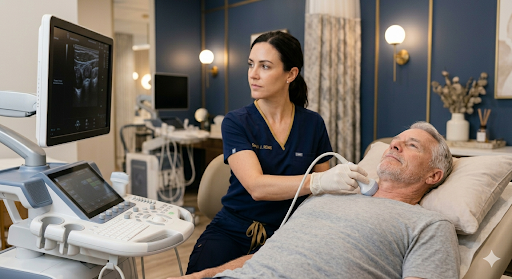
A painless, non-invasive scan that takes approximately 15–20 minutes. A small probe is gently placed on your neck while our sonographer captures detailed images of blood flow through your carotid arteries.
Aorta Aneurysm Screening
What It Is
A non-invasive ultrasound of your abdominal aorta — the largest artery in your body.
Why It Matters
An abdominal aortic aneurysm is often called the "silent killer" because it produces no symptoms until it ruptures — at which point it is 90% fatal. When caught early, it is treatable and manageable. This simple screening can save your life.
Who Should Get Screened
- Men over 65 (especially if they've ever smoked)
- Women over 70 with cardiovascular risk factors
- Anyone with a family history of aortic aneurysm
- Those with high blood pressure
- Current or former smokers
What to Expect
A quick, painless scan of your abdomen that takes approximately 10–15 minutes. You'll lie comfortably while our sonographer uses gentle pressure with the ultrasound probe to measure your aorta.

Echocardiogram
What It Is
A comprehensive ultrasound of your heart that evaluates how well your heart muscles are contracting and the integrity of your heart valves.
Why It Matters
Heart disease remains the #1 killer in America. An echocardiogram can detect weakened heart muscles, valve problems, and other cardiac conditions that often go undiagnosed. Early detection means earlier treatment and better outcomes.
Who Should Get Screened
- Anyone with shortness of breath or chest discomfort
- Those with a family history of heart disease
- People with high blood pressure or diabetes
- Athletes wanting baseline heart health data
- Adults over 50 who've never had a heart screening
What to Expect
A painless, non-invasive scan where a probe is placed on your chest to capture detailed images of your heart in motion. Takes approximately 20–30 minutes.

Peripheral Artery Disease Screening
What It Is
A non-invasive ultrasound of the arteries in your legs to evaluate blood flow and check for blockages.
Why It Matters
Peripheral artery disease (PAD) affects over 8 million Americans and is a major warning sign for heart attack and stroke. Symptoms like leg pain, numbness, or swelling during walking are often dismissed as "just getting older" — but they can signal serious arterial blockages.
Who Should Get Screened
- Those experiencing leg pain, cramping, or heaviness when walking
- People with numbness or tingling in their legs
- Smokers or former smokers
- Diabetics
- Anyone with known heart or vascular disease
What to Expect
A painless scan of both legs that takes approximately 20–30 minutes. Our sonographer will trace the arterial blood flow from your upper thighs to your ankles.

Abdomen Complete Ultrasound
What It Is
A non-invasive ultrasound scan of the major abdominal organs including liver, gallbladder, kidneys, spleen, and pancreas.
Why It Matters
Many abdominal conditions — fatty liver disease, gallstones, kidney cysts, and more — develop silently. Early detection allows for monitoring and treatment before symptoms appear.
Who Should Get Screened
- Anyone with persistent abdominal discomfort or bloating
- Those with a family history of liver or kidney disease
- People with elevated liver enzymes on bloodwork
- Adults over 45 wanting a comprehensive baseline
What to Expect
A painless scan of the abdomen taking approximately 20–30 minutes. You may be asked to fast for 4–6 hours beforehand for optimal imaging of the gallbladder.
Thyroid Ultrasound
What It Is
A non-invasive ultrasound of the thyroid gland in the front of your neck.
Why It Matters
Thyroid nodules are extremely common and usually benign, but imaging is the only way to evaluate them. Early identification allows your doctor to monitor or investigate further as needed.
Who Should Get Screened
- Anyone with a known or suspected thyroid nodule
- Those with thyroid symptoms (fatigue, weight changes, neck swelling)
- Family history of thyroid disease or cancer
- Adults wanting a comprehensive wellness baseline
What to Expect
A quick, painless scan of the neck taking approximately 15–20 minutes. No prep required.
Find the Right Package for You
Compare our three screening packages to find the level of care that fits your needs.
Common Questions
What is an ultrasound screening?
Are the screenings painful?
How long does a screening take?
Do I need a doctor's referral?
Ready to Get Screened?
Take the first step toward peace of mind. Book your screening today.